
The Foundation of Racing Lineage

Racehorse breeding has a rich history that goes back centuries, rooted in the idea that a horse’s lineage can determine its speed, stamina, and even temperament on the track.
To understand today’s racehorses, it’s essential to look back at the origins of the thoroughbred bloodline and the selective breeding practices that created the athletes we see today.
From the influence of legendary sires to the formation of studbooks, the foundation of racing lineage is a fascinating story of heritage, strategy, and tradition.
The Origins of the Thoroughbred
Thoroughbred racehorses trace their ancestry to three foundation sires: the Byerley Turk, the Darley Arabian, and the Godolphin Arabian.
These stallions, imported to England in the late 17th and early 18th centuries, introduced traits like speed, endurance, and athleticism into the English bloodstock. Breeders meticulously paired these sires with select mares, seeking to create a breed capable of excelling in racing.
The results were dramatic, leading to a breed that was both elegant and powerful—a combination that continues to define the modern thoroughbred.
- The Byerley Turk : Named after Captain Robert Byerley, who captured him in battle in 1686, the Byerley Turk was renowned for his endurance and fiery spirit. Though his influence is less prominent than that of the Darley Arabian or Godolphin Arabian, his descendants carry a legacy of resilience and heart.
- The Darley Arabian : Brought to England by Thomas Darley in 1704, the Darley Arabian was noted for his speed and refined build. His bloodline became a dominant force in the thoroughbred gene pool, and today, the majority of thoroughbreds trace their ancestry to him. This stallion’s progeny became famed for their swiftness and agility, marking him as a foundational influence on racing lineage.
- The Godolphin Arabian : Arriving in England around 1729, the Godolphin Arabian was originally given as a gift to King Louis XV of France. Eventually acquired by the Earl of Godolphin, this stallion displayed a compact, muscular build and an extraordinary drive, traits that continue to influence thoroughbreds to this day. His descendants were known for their strength, and he remains a prominent figure in the pedigree of many champion horses.

Together, these three sires shaped the genetic base of the modern thoroughbred. With their arrival, breeders began to understand the value of recording bloodlines, leading to the establishment of the General Stud Book in England in 1791.
This registry documented pedigrees and set strict criteria for a horse to be recognized as a thoroughbred, laying the groundwork for the regulated breeding and racing industries we know today.
Selective Breeding and the Importance of Lineage
The breeding practices that developed over time were based on the idea that specific traits could be isolated and passed down through generations.
Breeders aimed to enhance particular qualities like speed, stamina, and conformation by matching sires and dams with complementary strengths.
This was the beginning of selective breeding in its modern form, an approach that requires both knowledge and foresight.
One critical aspect of selective breeding is linebreeding, a practice where horses are paired to reinforce desirable traits from a common ancestor.
For example, a sire may be chosen for his resemblance to a famed ancestor, with the hope that he will pass down specific genetic attributes, like a powerful stride or an exceptional turn of speed.
This strategy helps maintain the purity of the bloodline while amplifying the qualities that define top-tier racehorses.
The Role of Studbooks and Pedigree Tracking
The formal recording of pedigrees became increasingly important as breeders realized that detailed records allowed them to make more informed breeding choices.
The General Stud Book, first published in England, served as a critical resource for breeders who sought to trace the lineage of potential sires and dams.
This registry established the standards for what constituted a thoroughbred and has since been emulated worldwide, with studbooks created in North America, Australia, and other major racing nations.
Pedigree tracking provided insights into which bloodlines consistently produced fast, durable horses, and which combinations resulted in horses with weaknesses, such as susceptibility to injury or difficulty adapting to varying track conditions.
This data helped breeders refine their approaches over generations, ultimately leading to the finely tuned athletes we see on the track today.
Legends of the Early Bloodlines
Some early champions set the stage for modern breeding, their names woven into the fabric of racing history. Among them was Eclipse, a descendant of the Darley Arabian, who was undefeated in 18 races.
His progeny carried on his legacy, and his bloodline can still be traced in many of today’s champions. Known for his dominance on the track and his profound influence as a sire, Eclipse’s impact extended beyond his victories; his bloodline became synonymous with excellence.
Similarly, Herod, a grandson of the Byerley Turk, was another influential sire who passed down traits of endurance and tenacity.
Known as a horse with immense staying power, Herod’s descendants excelled in long-distance races, adding stamina to the thoroughbred gene pool. His influence provided a counterbalance to the speedier Darley Arabian bloodline, giving rise to thoroughbreds that could handle a variety of distances.
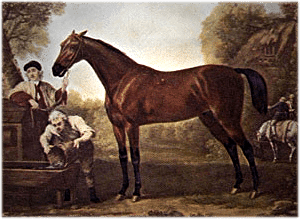
Matchem, a grandson of the Godolphin Arabian, was another figure of note in the early pedigrees.
Known for his versatility, he contributed to a balanced bloodline that embodied both speed and strength. Together, Eclipse, Herod, and Matchem became known as the “big three” foundation sires of English thoroughbreds, and their legacy endures in the pedigrees of racehorses around the world.
The Evolution of Pedigree Strategy
As the centuries progressed, breeders became more strategic in their approach to lineage. Bloodlines were selectively crossed to create horses with optimal traits for specific types of races.
For example, lineages with a high concentration of Darley Arabian genes were often favoured for shorter sprints, while horses with Byerley Turk ancestry were prized for endurance events.
This evolution wasn’t without its risks. Inbreeding, while used strategically to amplify desirable traits, also increased the likelihood of passing on genetic weaknesses.
This challenge has shaped breeding practices, and it’s one reason why today’s breeders are careful to balance inbreeding with outcrossing—introducing new genes to maintain genetic diversity and reduce the risk of inherited health issues.
Conclusion
The foundation of racing lineage is a story of tradition, science, and a relentless quest for excellence.
From the Byerley Turk, Darley Arabian, and Godolphin Arabian, each bringing unique traits to the thoroughbred breed, to the creation of studbooks and the fine art of selective breeding, the world of racehorse lineage is built on centuries of careful planning and observation.
Each pedigree carries not only a genetic code but also a legacy, with the hope that each new generation might produce a champion.
In the chapters that follow, we will dive deeper into specific elements of racehorse pedigree: how genetics influence performance, the roles of sires and dams, and how breeders make decisions that shape the future of the sport.
Understanding the foundation of racing lineage allows us to appreciate the power of pedigree and the strategic foresight that continues to shape the world of racing today.
Read the complete book — download your copy today.