
How to spot a good two-year-old at the Ready to Race sale
3 min read
What to look for in a two-year-old at the Inglis Ready to Race sale, and the faults most buyers miss: paddling, crossfiring, high knee action and a short stride.
At every Inglis Ready to Race sale, I see buyers falling over themselves for the fastest breeze times. That is a serious mistake. Many of these horses are prepared to be sold, and they are pushed hard and early to run time.
If you can look a little deeper, you separate yourself from most of the market. In the video below, filmed at the 2024 sale, I walk through the features I look for and the faults I avoid, using real horses.
1. The A-type mover
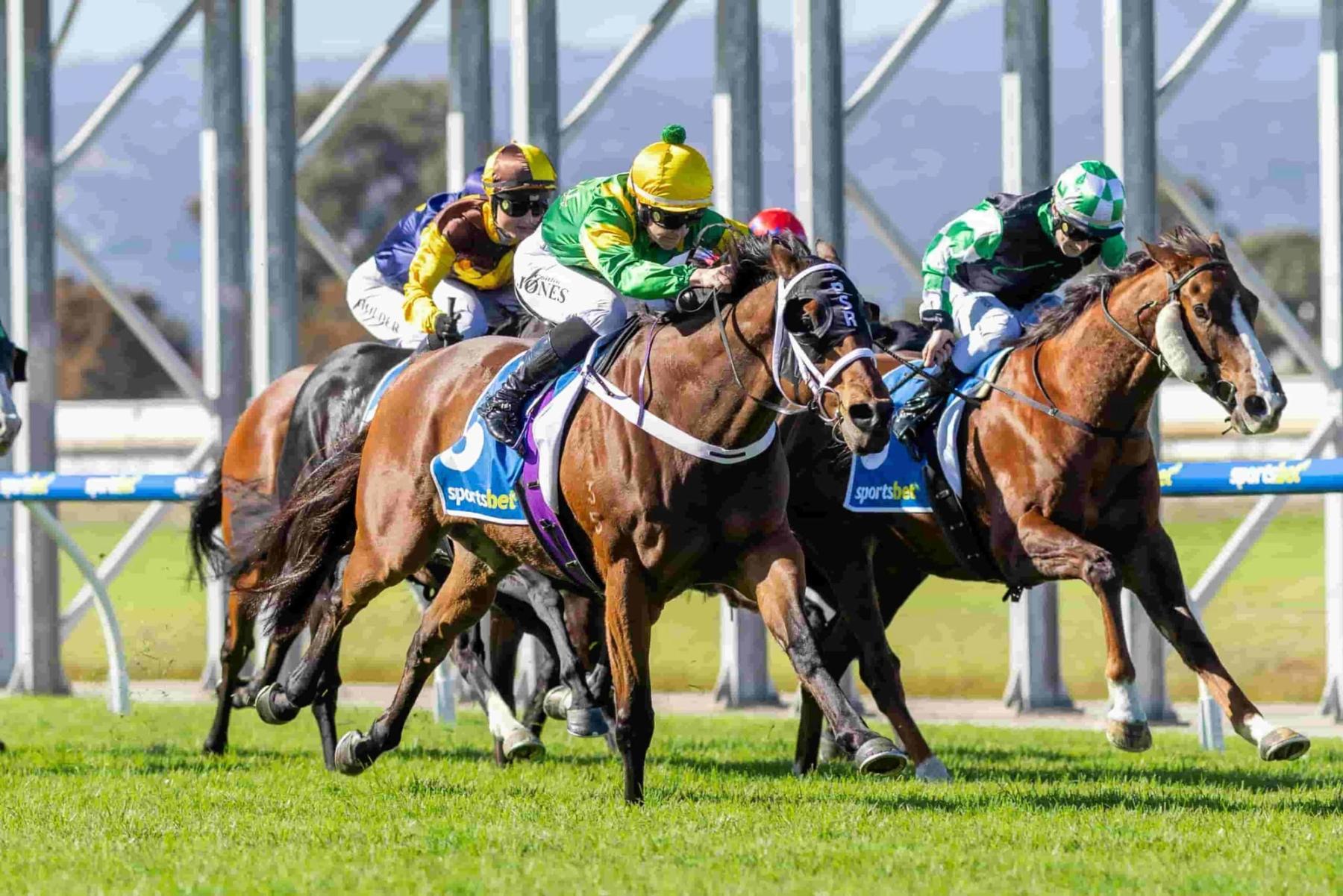
This is what you want to see. The action is low and smooth, close to the ground, with no wasted energy, no high knee action and no paddle. The limbs move forward and back in straight lines, with a long reach and stride.
Forgot You is a good example. He was bought at the 2020 Ready to Race sale and went on to win the Group 2 Moonee Valley Vase. You might also recognise the second example in the video: our own Regal Might, the colt we bought at the previous year's sale.
2. Paddling
Paddling is when the knee or ankle joint does not travel straight forward and back. Watch the near-fore knee, and look for a twisting motion in the front legs.
3. Introduced bad habits
Some faults are not natural. They are worked in during an early, hard preparation, and they are very hard to train out. They create inefficiencies in balance and action that cost a horse on race day.
4. Crossfiring
On the left lead, a galloping horse lands right hind first, then the diagonal pair, left hind and right fore, together, and finally the left fore. Crossfiring means the front and hind legs are on opposite leads. Many green, inexperienced horses charge and crossfire, and it costs them on the track.
The video compares Otelo, charging and crossfiring, with Gorgeous Vitality, who had a good action, and lets you be the judge.
5. High knee action and curl
High knee action wastes energy: if you bring it up, you have to bring it down. Curl, where the front feet come too close to the belly when flexed, is another inefficiency in motion.
6. A short stride
Long stride plus high cadence equals speed and efficiency. We use motion-analysis software to measure cadence and stride length, and the last horse in the video has a stride almost two feet below average.
What to look for, and what to avoid
Look for:
- a low, smooth action close to the ground
- limbs that move in straight lines
- a long stride with high cadence
Watch out for:
- paddling
- crossfiring
- high knee action and curl
- a short stride
- buying on breeze times alone
Having a good eye, and weighing even a few of these points, can save you a lot of money and put you well on the way to securing a nice horse. It's how we choose our own: you can see the horses we have shares in, and if you'd like to talk any of this through, I'm always happy to take your call.
More from the Journal
 Bloodlines6 min read
Where the thoroughbred began
Every racehorse traces back to three foundation sires, and centuries of selective breeding shaped the horses we race today.
Read → Bloodlines2 min read
Racing's great families
How certain families keep producing winners, and how to recognise them on a pedigree page.
Read → Bloodlines3 min read
What to look for in a yearling
Conformation, pedigree, temperament and a good eye: what matters when judging a horse that has never raced.
Read →Two horses available soon

Exceed And Excel x Ektifaa colt
There will never be another Exceed And Excel. This colt is one of the last.
From the champion sire's final crop, bred on the same cross as triple Group 1 winner Bivouac. He breezed in 10.38 seconds, inside the top sixth of 256, and he's nominated for the Blue Diamond and the Golden Slipper.

Zoustar x Mary's France
Ten days after we bought him, his cousin won a Group 1.
By champion sire Zoustar, the sire of our own Regal Zeus, from a French family that also produced an Arc winner. He breezed his last 200 metres in 10.46 seconds, under no great pressure.
General advice only. Each horse’s PDS is available on request. Read it and the FSG available on request before acquiring a share.
Regal Bloodstock Pty Ltd (ABN 20 609 555 295) is an Authorised Representative (No. 001 263 825) of Sire Custodians Ltd, AFSL 223 671.
Start with the guide.
What a share costs, the monthly running costs, how prizemoney is paid and what your first year looks like.